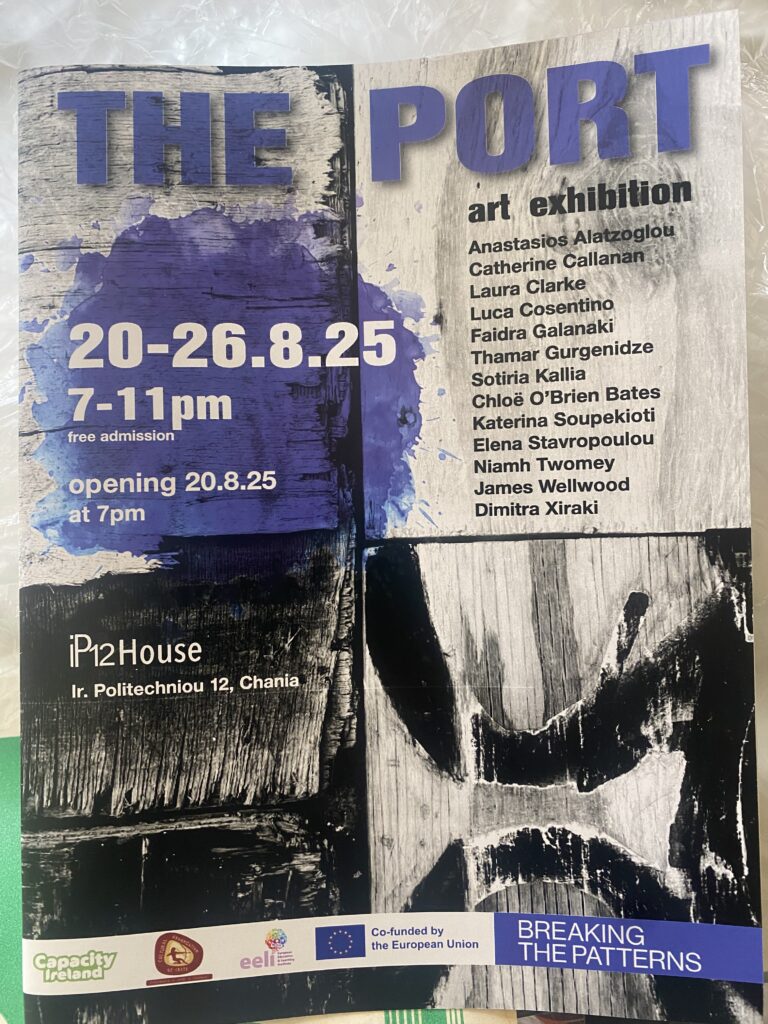
This work emerged from a three-month funded artist residency in Chania, Crete in 2025. The setting itself was extraordinary — the generosity of many of the Greek people, the light, the sea, the rhythm of the city. Like most residencies, however, the lived reality was more complex than the postcard version.
But back to the work, which is always the place to return to.
The seeds for the work began after a conversation with a Greek artist I had been considering collaborating with. She was visibly pregnant. During our conversation she told me that her pregnancy was to be terminated later that same day due to a test. She was five months pregnant. I am pro-choice.
Afterwards, I began researching prenatal testing practices in Greece and across Europe. I discovered that routine prenatal screening at this stage of pregnancy is common in many countries, and that high percentages of pregnancies diagnosed with significant foetal anomalies are subsequently terminated. What struck me was not simply the medical reality, but the openness and lack of stigma surrounding the conversation. I also realised I had never before encountered a situation when the independent physical presence of an unborn child was so evident one day and voluntarily absent the next. I found myself unexpectedly affected by that awareness.
The unborn child would have been female. The mother associated her with the image of a butterfly.
My interest gradually shifted away from the medical aspects themselves and towards what these decisions revealed socially and culturally – questions around care, support systems, economics, fear, pragmatism, motherhood, and the unseen labour women carry. It also sharpened my awareness of parallels between aspects of contemporary Cretan society and the Ireland I had known as a young woman during the 1980s.
A thread began to emerge: Women Waiting.
Waiting outside schools. Waiting in supermarkets. Waiting for buses, appointments, phone calls, test results, proposals, pregnancies, diagnoses, permissions, departures. Waiting became both a physical posture and a social condition.
At the same time, I became increasingly aware of how often women’s voices still appeared moderated or deferred within social structures in 2025 Crete. It reminded me strongly of an earlier Ireland (not identical, but recognisable in certain gestures and dynamics).
The residency theme broadly revolved around the idea of “Port.” For me this became less about geography and more about exchange, transition, ebb and flow, departure and return; what is carried, what is left behind, what moves between bodies, histories and places.
From there the research expanded outward through mythology, material, biology and place.
I began photographing women in moments of waiting throughout Chania. I researched lunar cycles, female archetypes, labyrinths, Celtic spirals, butterflies, Ariadne’s thread, Minoan symbolism, selkie mythology, hag stones, and traditions surrounding portals and the otherworld. I was reading If Women Rose Rooted, which strongly resonated with my thinking around land, ancestral memory, feminine knowledge and mythic inheritance.
Alongside this, I was deeply researching:
- micro chimerism,
- epigenetics and intergenerational trauma,
- the body as archive,
- feminine labour and unnoticed care,
- and ethical looking, particularly through the writings of Emmanuel Levinas and Simone Weil.
Around the same period, important artistic references included Doris Salcedo, Mona Hatoum, Tatiana Trouvé and Ailbhe Ní Bhriain.
I could see that a consistent thread ran through everything I was reading and making: women carrying something unseen — biologically, psychologically, culturally, spiritually or socially. Even the research into micro chimerism began to sit conceptually beside Ariadne’s thread and the dispersed figurines. The body retaining traces became parallel to the city retaining traces.
The resulting works included:
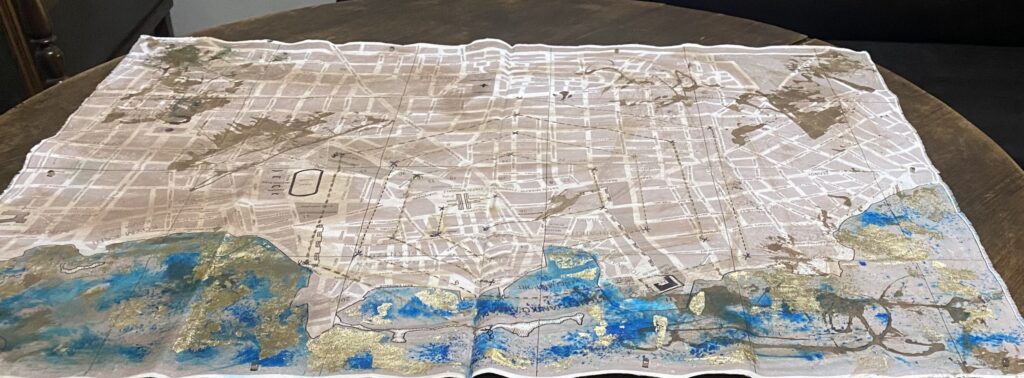
- A map of Chania printed on repurposed canvas and treated like a worn treasure map. Superimposed across it were two Celtic spirals — one path leading inward, the other outward. The entrance point was the port of Chania. Thirteen points marked each route, referencing lunar cycles, feminine archetypes and the thirteen menstrual cycles within a year.
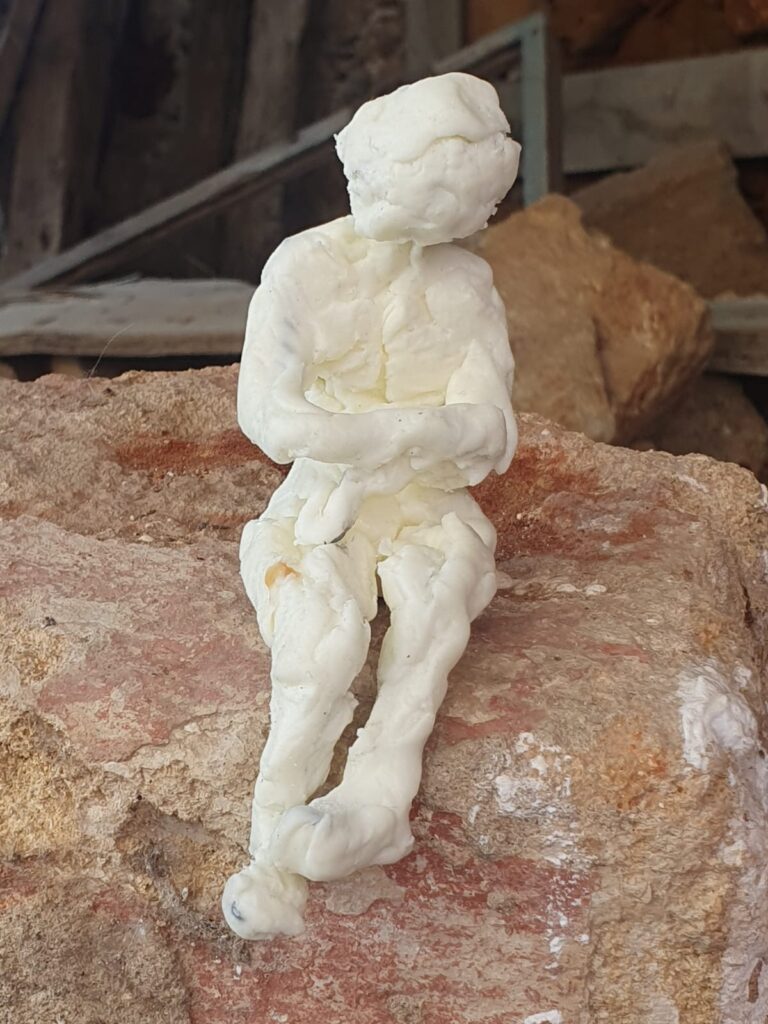
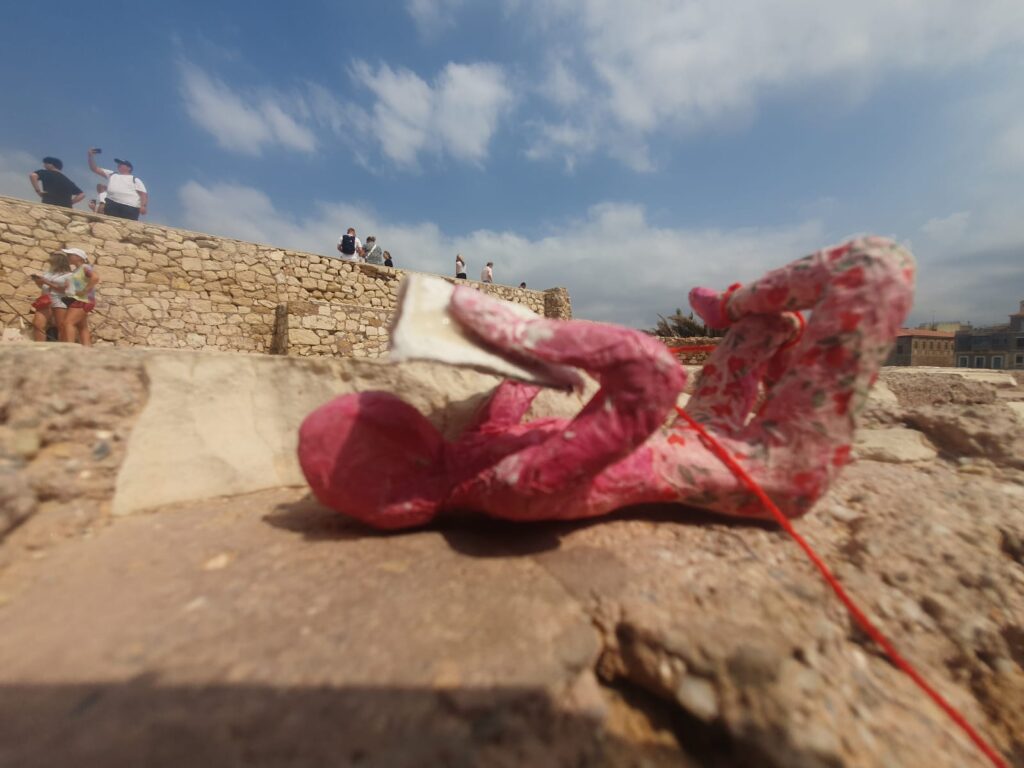
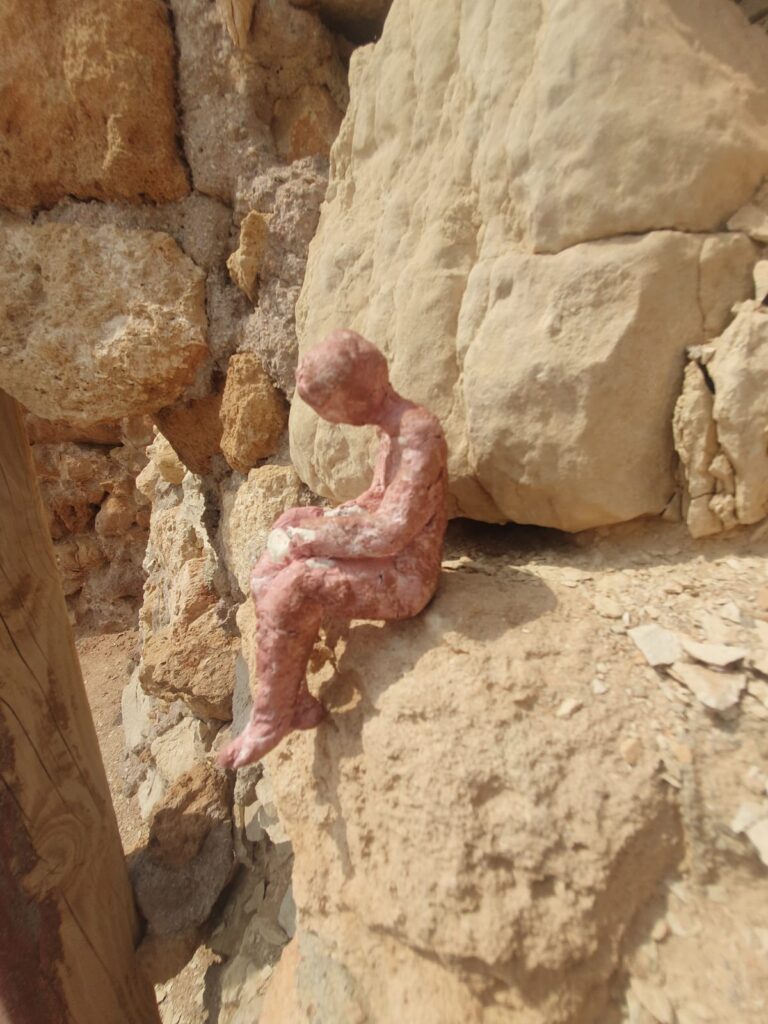
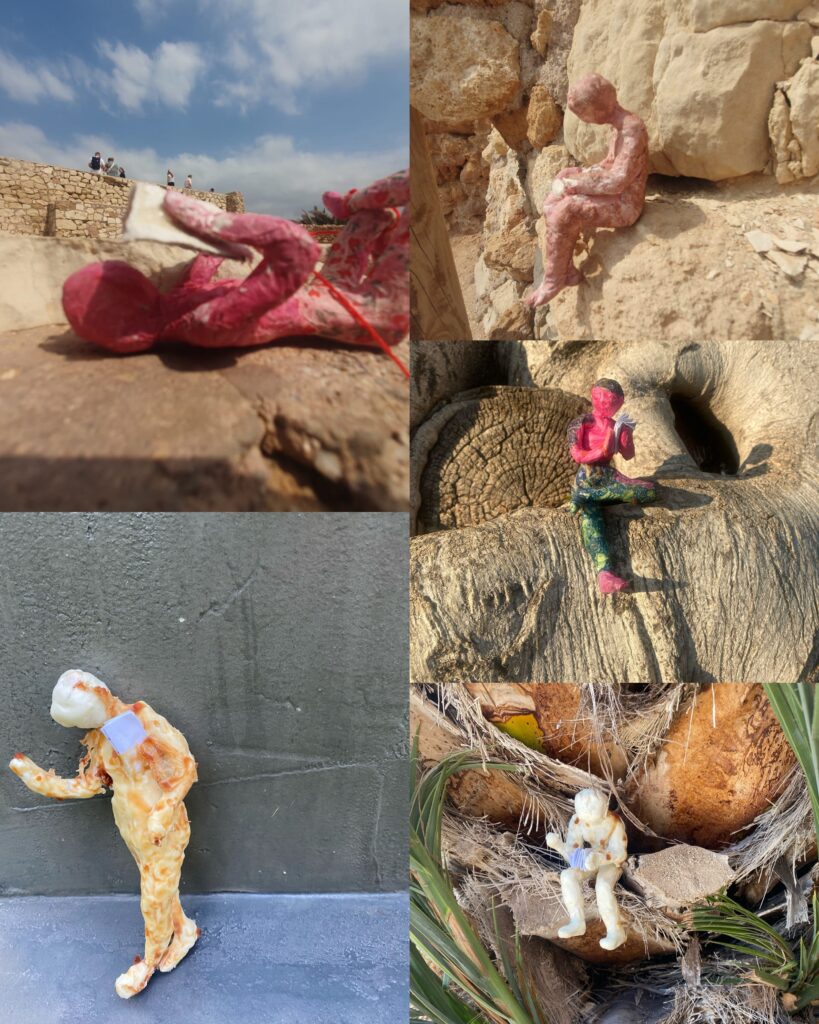
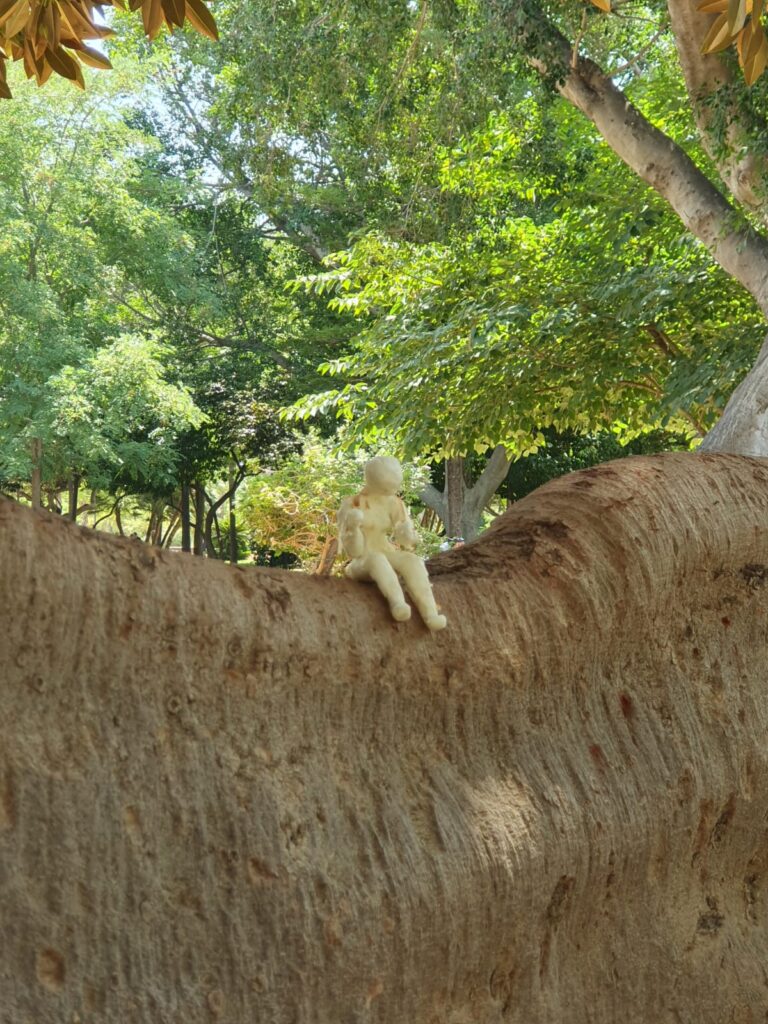
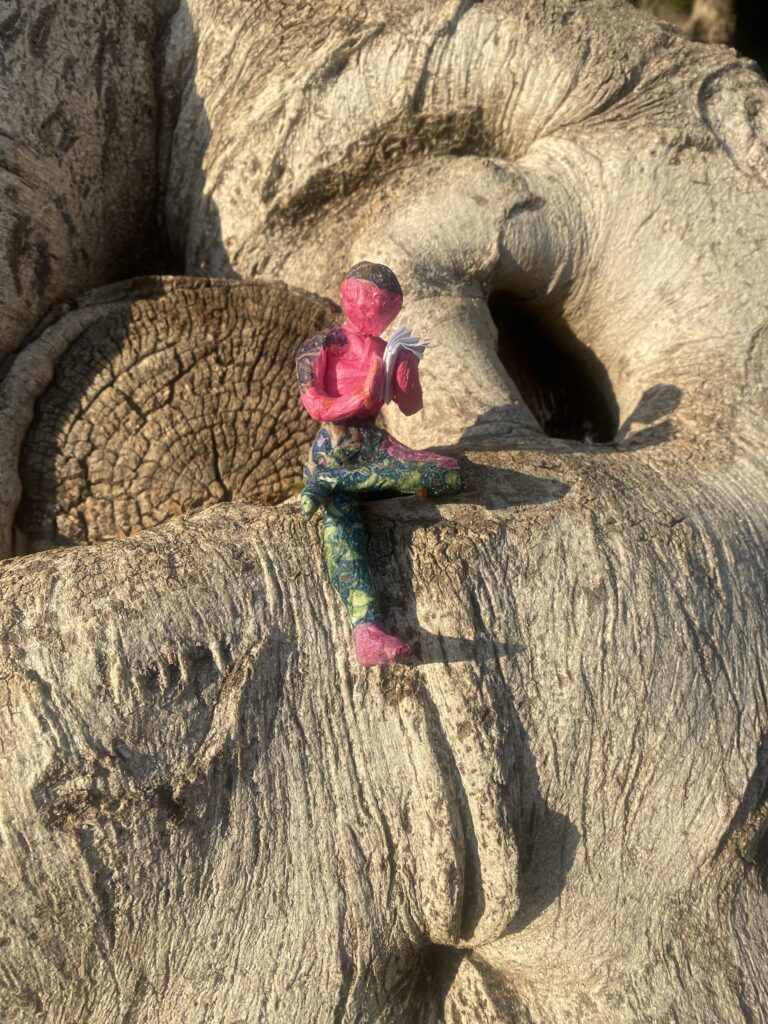
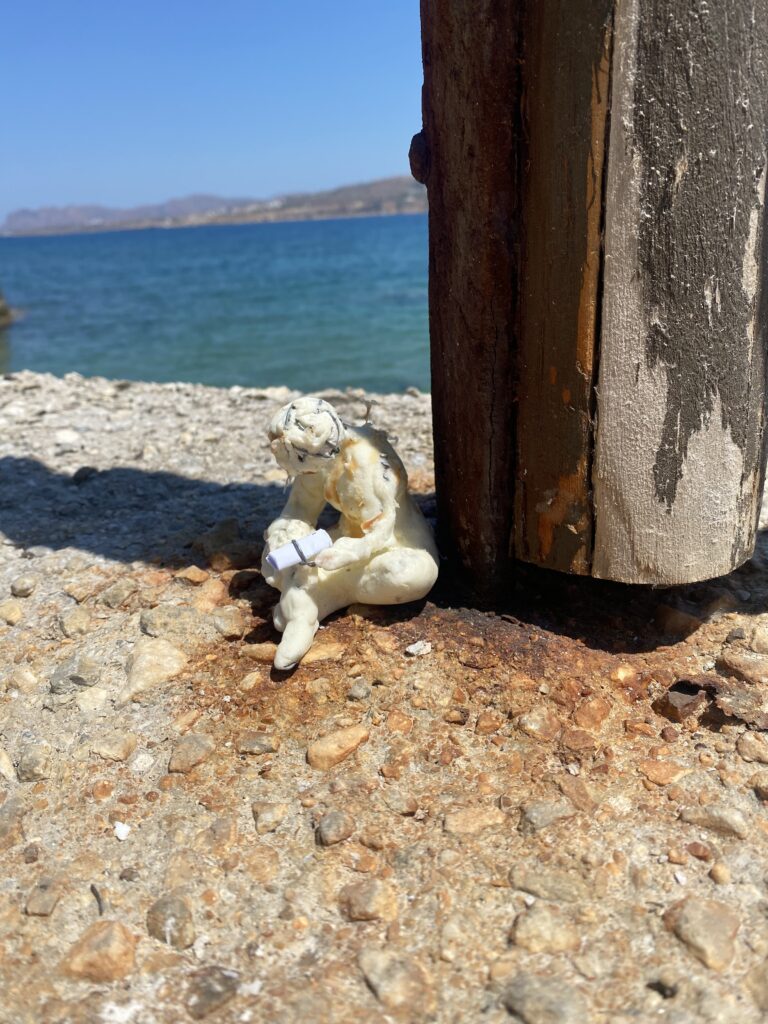
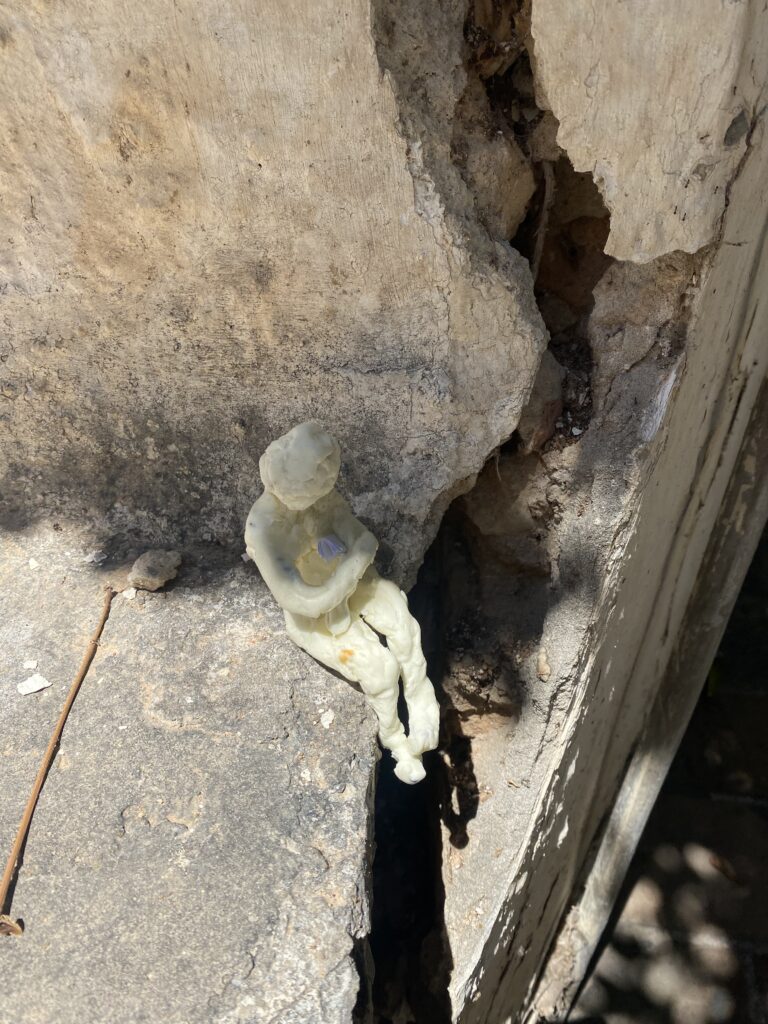
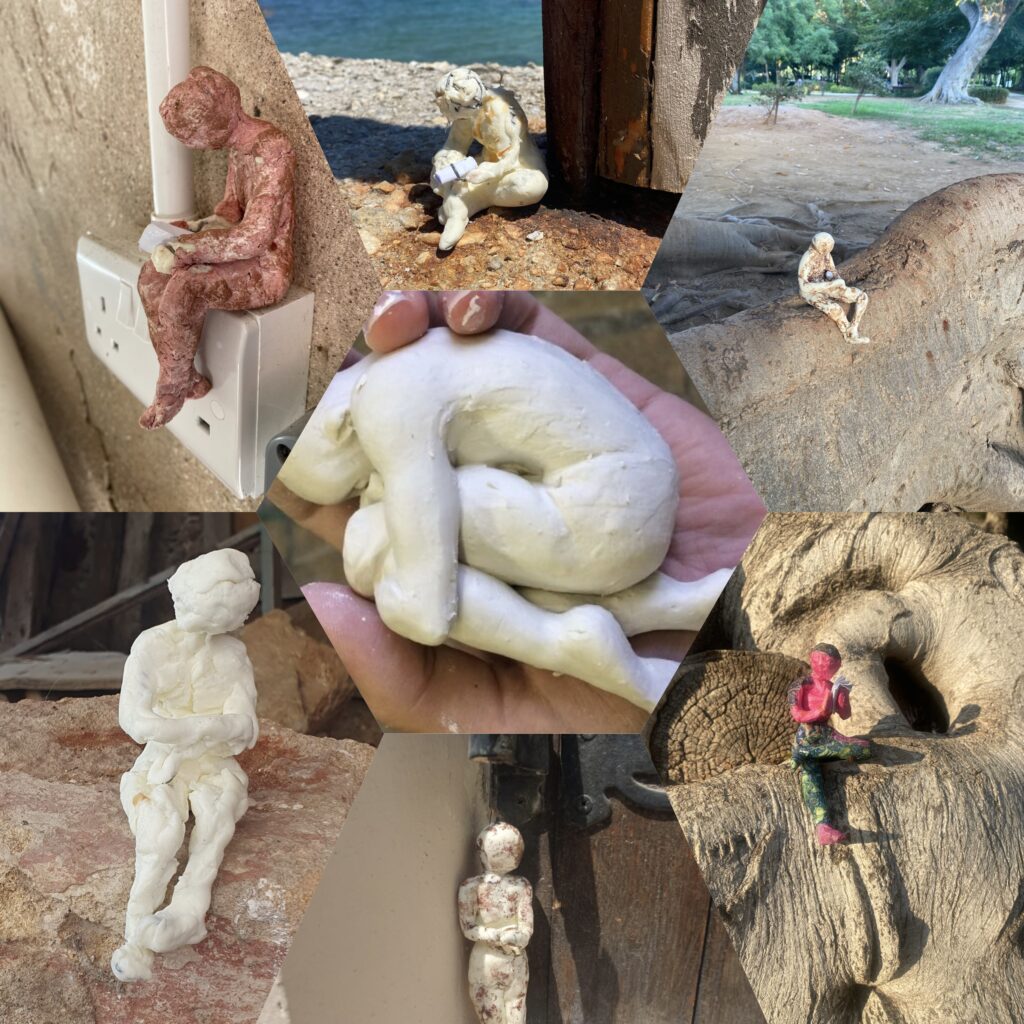
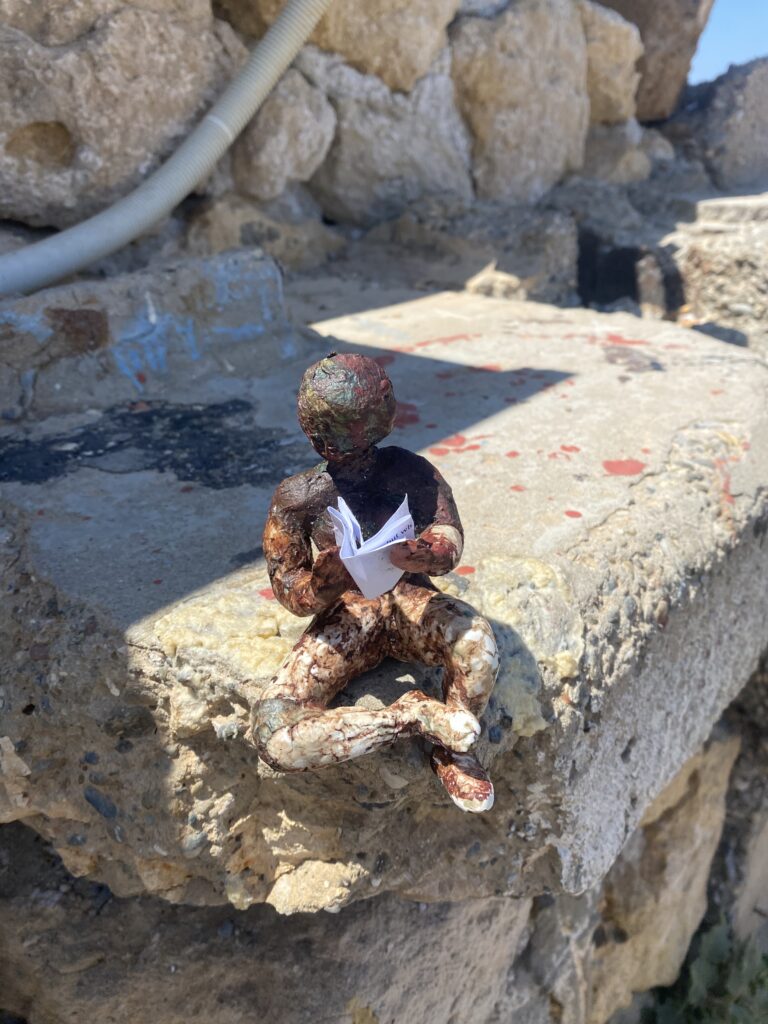
- Twenty-six miniature female figurines placed throughout the city at these marked positions. Each figure carried a printed phrase in both Greek and English, drawn from the texts and research informing the work.
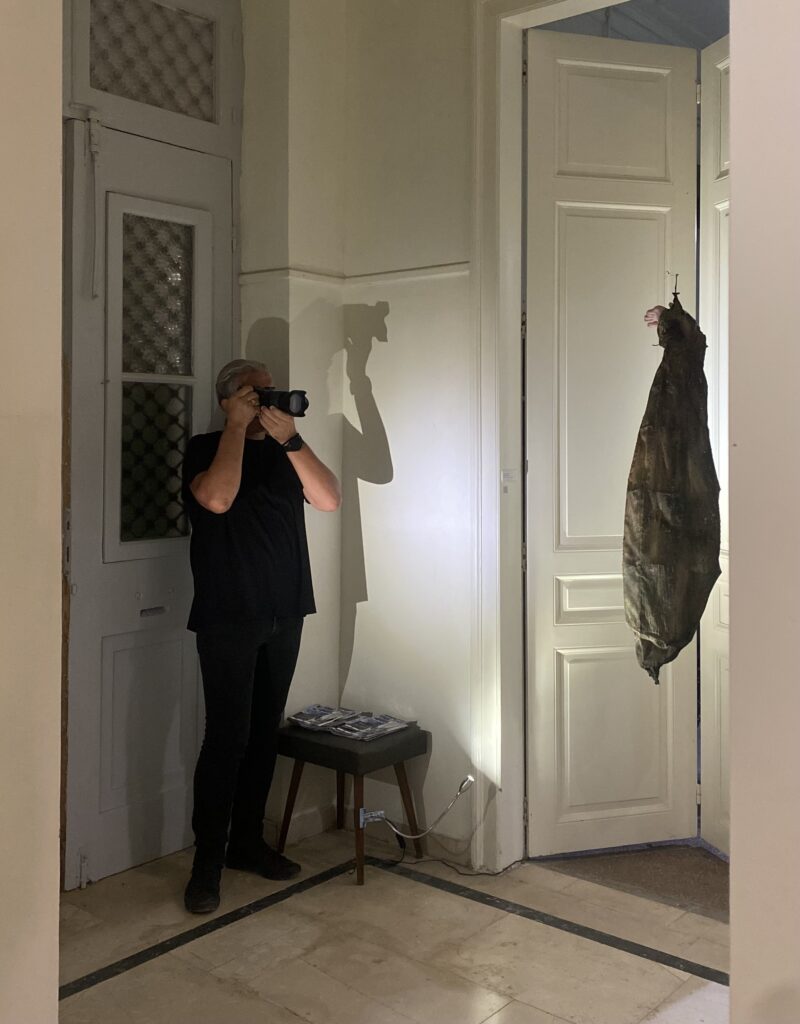
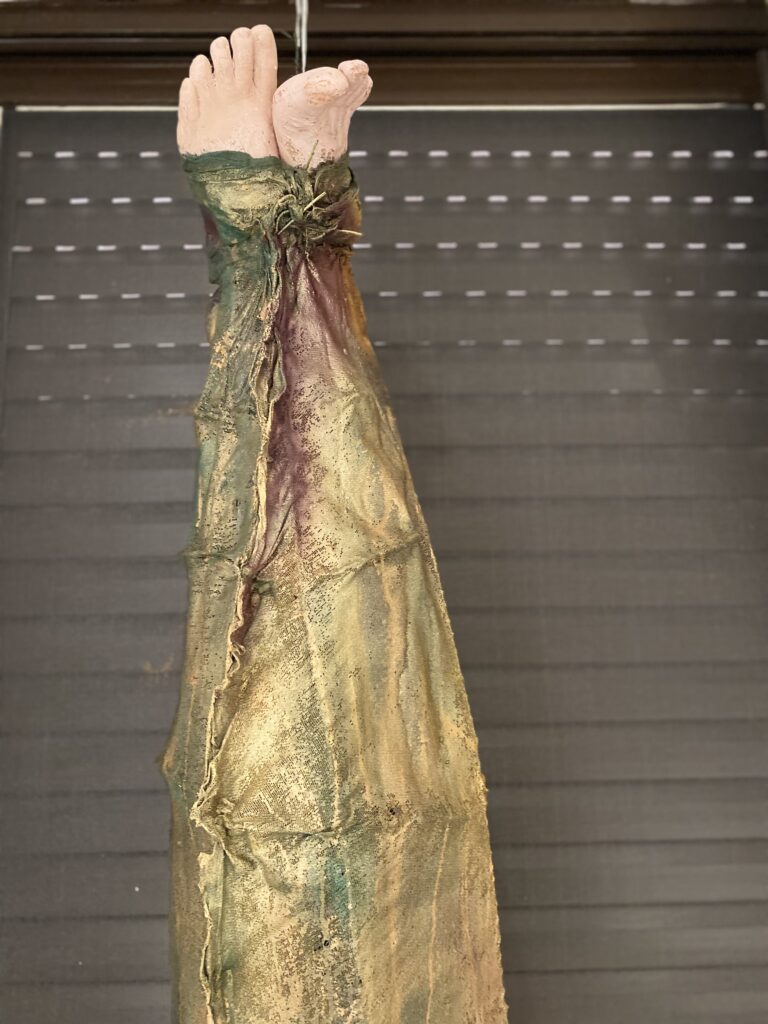
- A life-sized cocoon structure constructed from linen and found reeds, with wax casts of my feet protruding from the form.
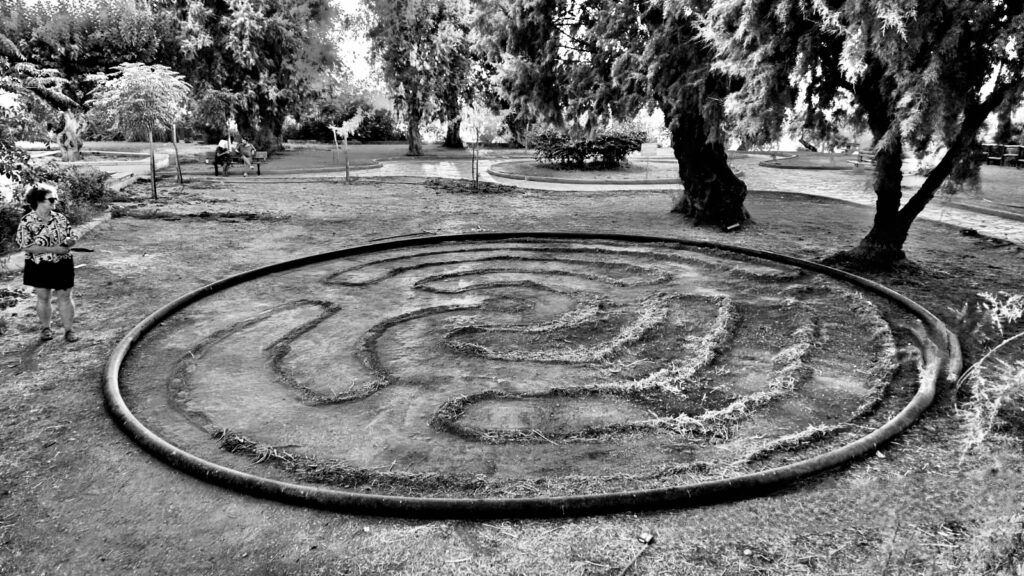
- A temporary public labyrinth installation designed to be walked through physically and slowly.
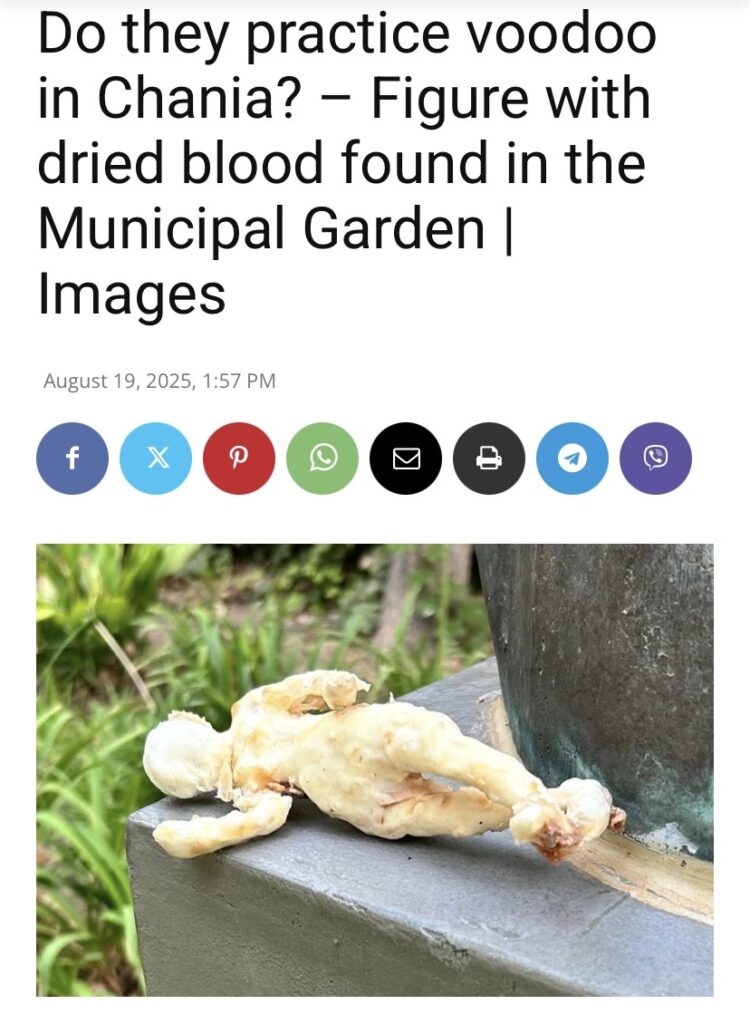
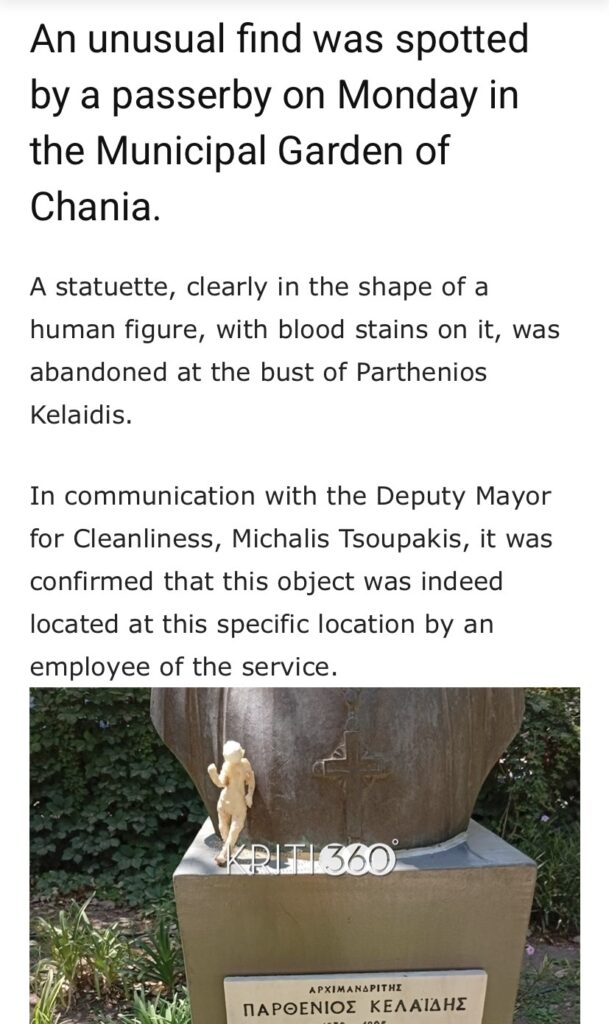
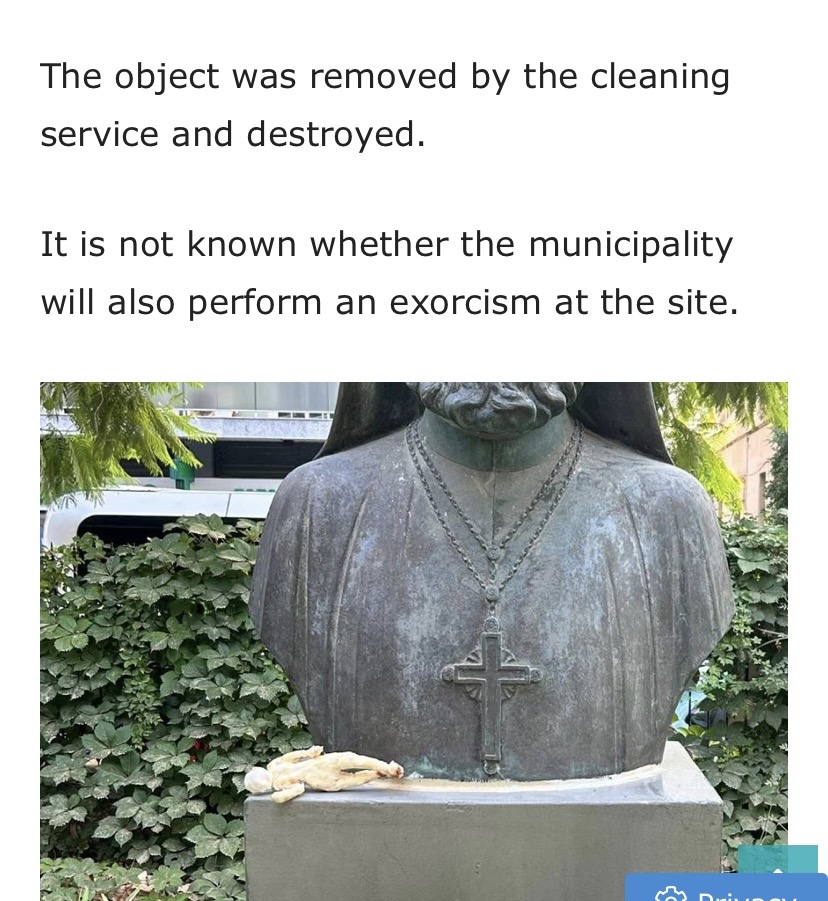
An unexpected development emerged toward the end of the project when local media reported that one of the figurines discovered in the city was believed to be a “voodoo doll,” prompting public discussion around whether an exorcism might be required. I had left Crete before the proposed event took place — though I would gladly have attended.
My initial reaction was amusement, followed by genuine fascination at the chain of thought that transformed these small female figures into something feared or spiritually suspect. The response felt strangely reminiscent of a contemporary echo of the Salem witch trials — revealing how quickly ambiguity, female symbolism, and the unknown can still trigger projection and suspicion.
Ultimately I took it as an affirming moment. The work had moved beyond passive viewing and entered public imagination and local folklore in ways I could never have anticipated. In some ways, it felt almost equivalent to having a banned book — a sign that the work had unsettled something real.